


Tea for the Cold Season: Comforting Cups and How to Brew Them
Green tea, black tea, rooibos and herbal blends with ginger, lemon and spice: the teas people reach for in the cooler months, and how to brew each one well.
By the Tealyra Tea Team · · 3 min read
When the weather turns cold, a warm cup of tea becomes part of the daily routine for many people. This guide looks at the teas people most often reach for in the cooler months, from green and black tea to rooibos and herbal blends with ginger, lemon and spices, and how to brew each one well.
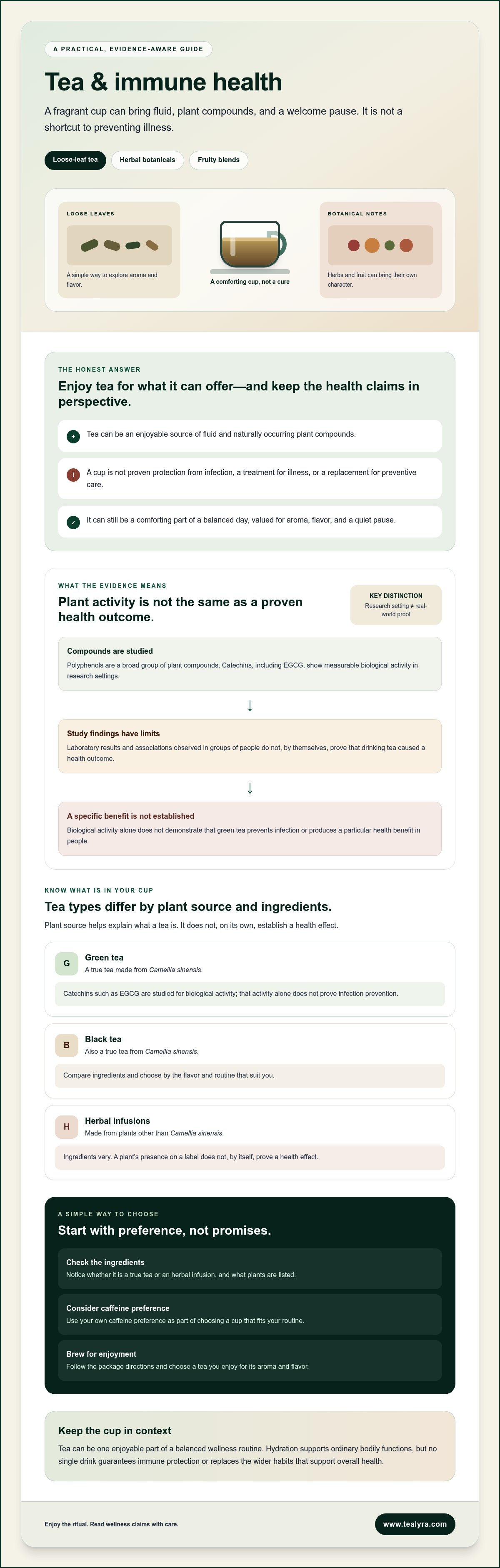
Table of Contents
- 1. Why tea fits the cold season
- 2. Green and black tea
- 3. Rooibos and caffeine-free herbal infusions
- 4. Warming additions: ginger, lemon, honey and spice
- 5. How to brew a comforting cup
- 6. A note on health claims
- FAQ
1. Why tea fits the cold season
A hot drink is simply comforting on a cold day. Tea is also an easy way to drink more fluids through the day, and there is a cup for every moment: a brisk black tea in the morning, a light green tea after lunch and a caffeine-free herbal infusion in the evening.
2. Green and black tea
Green and black tea both come from the same plant, Camellia sinensis. Green tea is heated soon after picking, which keeps it fresh, grassy and light. Black tea is fully oxidized, which gives it a deeper color and a malty, robust flavor. Both contain caffeine, so they suit the morning and early afternoon best.
- Explore Chinese green tea for toasty, nutty cups, or Japanese green tea for vivid, grassy ones.
- Try black tea plain or with milk, or a flavored black tea with spice or fruit.
3. Rooibos and caffeine-free herbal infusions
Rooibos is naturally caffeine-free, sweet and nutty, and it takes milk well, which makes it a cozy choice for winter evenings. Herbal infusions such as chamomile, peppermint, ginger and fruit teas offer bright or soothing flavors without caffeine. Browse the herbal tea collection for single herbs and blends.
4. Warming additions: ginger, lemon, honey and spice
- Ginger: a few slices of fresh ginger add heat and spice to black tea or herbal infusions.
- Lemon: a slice brightens green tea, black tea and herbal blends.
- Honey: stir it in once the tea has cooled slightly so its flavor stays fresh.
- Spices: cinnamon, cloves and cardamom turn black tea or rooibos into a warming spiced cup.
5. How to brew a comforting cup
- Green tea: water at 75 to 80°C (167 to 176°F), 2 to 3 minutes.
- Black tea: water at 95 to 100°C (203 to 212°F), 3 to 5 minutes.
- Rooibos and herbal teas: freshly boiled water, 5 to 7 minutes.
- Use about 1 teaspoon of loose leaves per 8 oz cup and adjust to taste.
Pro Tip: Brew a pot of rooibos or herbal tea in the evening and keep it warm under a tea cozy so the next cup is ready when you are.
6. A note on health claims
Tea is a pleasant everyday drink, not a medicine. Be wary of products that promise to “boost” or “strengthen” the immune system. If you feel unwell, or you are pregnant or take regular medication, talk to your doctor. This article is general information about tea and is not medical advice.
FAQ
Which teas are caffeine-free?
Rooibos and herbal infusions such as chamomile, peppermint, ginger and fruit teas are naturally caffeine-free. Green, black, oolong and white tea contain caffeine.
What can I add to tea in winter?
Fresh ginger, a slice of lemon, a spoon of honey or warming spices such as cinnamon and cardamom all work well.
Does rooibos contain caffeine?
No. Rooibos is a South African herbal tea and is naturally caffeine-free.
Can tea replace medical care?
No. Tea is an everyday drink. If you are unwell, see a doctor.

