


After-Meal Tea Traditions Around the World
How different cultures end a meal with tea: Moroccan mint, Indian fennel and chai, Chinese pu-erh, European chamomile and Japanese hojicha, with brewing tips for each.
By the Tealyra Tea Team · · 3 min read
Almost every tea culture has its own way of ending a meal with a warm cup. In Morocco it is sweet mint tea, in India a pinch of fennel seeds or a spiced chai, in China a pot of pu-erh or oolong after a rich banquet, and across Europe a cup of chamomile or peppermint. This guide looks at these after-meal traditions, the herbs and teas behind them, and how to brew each one at home.
Table of Contents
- 1. North Africa: mint tea
- 2. India: fennel seeds and spice
- 3. China: pu-erh and oolong after a meal
- 4. Europe: chamomile and peppermint
- 5. Japan: hojicha and genmaicha
- 6. How to brew an after-meal cup
- 7. A note on safety
- FAQ
1. North Africa: mint tea
In Morocco, Algeria and Tunisia, mint tea is served after almost every meal and to every guest. Gunpowder green tea is brewed strong with a large handful of fresh spearmint and plenty of sugar, then poured from a height to create a light foam. The result is sweet, bright and cooling.
At home, try 1 teaspoon of gunpowder green tea and a small handful of fresh mint per cup, steeped for 3 to 4 minutes in water just off the boil. Browse green tea to find a gunpowder style.
2. India: fennel seeds and spice
In many Indian homes and restaurants, a small dish of fennel seeds, sometimes sugar-coated, is passed around after a meal to freshen the breath. Fennel also makes a naturally sweet, anise-like herbal tea. Crush 1 teaspoon of seeds lightly and steep them in freshly boiled water for 8 to 10 minutes.
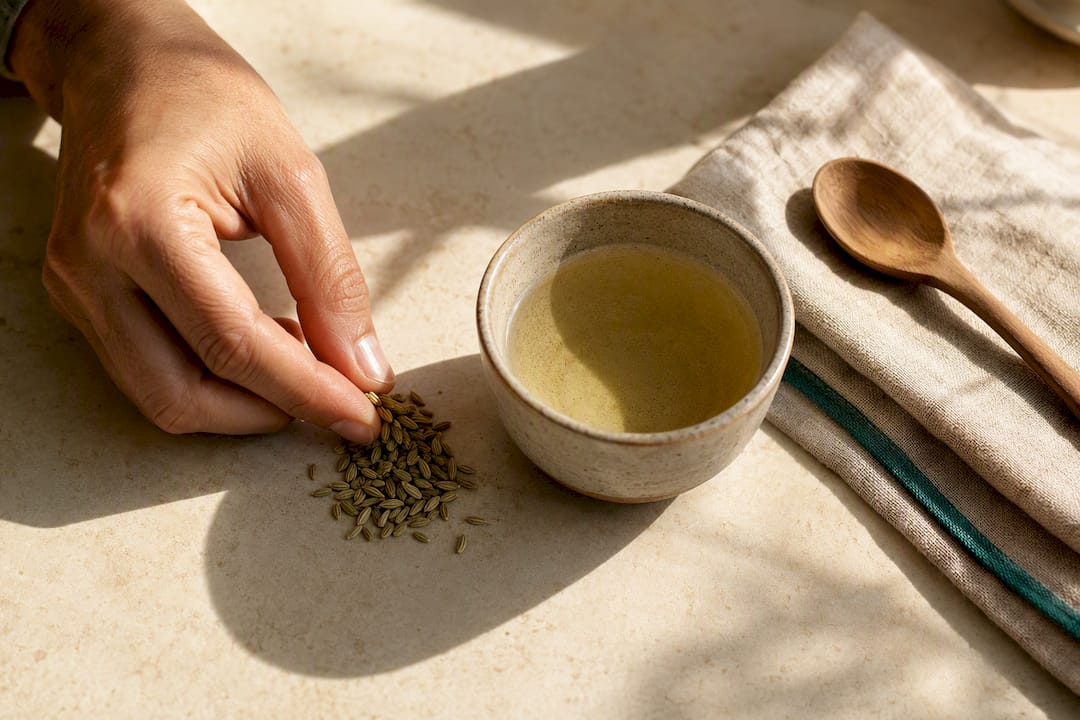
Spiced masala chai, with ginger, cardamom and cinnamon, is another warming way to finish a meal.
3. China: pu-erh and oolong after a meal
After a rich Cantonese or dim sum meal, many families drink pu-erh: an earthy, smooth, aged tea from Yunnan. Roasted oolongs such as Da Hong Pao and Tieguanyin are popular too. Both are brewed in small pots and steeped several times, which makes them perfect for lingering at the table.
Read our guides to pu-erh and Da Hong Pao to learn more.
4. Europe: chamomile and peppermint
In Germany, Austria and much of Europe, a cup of chamomile or peppermint after dinner is a family habit. Chamomile is soft and honeyed; peppermint is fresh and cooling. Both are caffeine-free, so they suit the evening well. People allergic to ragweed or daisies should choose peppermint over chamomile.
5. Japan: hojicha and genmaicha
Japanese restaurants often serve roasted green teas with or after a meal. Hojicha is roasted until it turns brown and toasty, with very little bitterness and less caffeine than most green teas. Genmaicha blends green tea with toasted rice for a nutty, savory cup.
6. How to brew an after-meal cup
| Tea | Water | Steep |
|---|---|---|
| Moroccan mint (green tea + mint) | 90°C (194°F) | 3–4 min |
| Fennel seed | 100°C (212°F) | 8–10 min |
| Pu-erh | 95–100°C (203–212°F) | Short steeps, several rounds |
| Chamomile or peppermint | 100°C (212°F) | 5–7 min |
| Hojicha | 90°C (194°F) | 30 sec–1 min |
Browse the herbal tea collection for chamomile, peppermint and fennel blends.
7. A note on safety
These teas are enjoyed every day around the world. If you have ongoing digestive discomfort, are pregnant or breastfeeding, or take regular medication, talk to your doctor rather than relying on tea. This article is general information about tea traditions and is not medical advice.
FAQ
Which teas are traditionally served after meals?
Moroccan mint tea, fennel seeds and masala chai in India, pu-erh and oolong in China, chamomile and peppermint in Europe, and hojicha or genmaicha in Japan.
Are after-meal teas caffeine-free?
Herbal teas such as chamomile, peppermint and fennel are caffeine-free. Mint tea made with green tea, pu-erh, oolong and hojicha contain caffeine; hojicha has relatively little.
How do I make Moroccan mint tea?
Steep gunpowder green tea with a handful of fresh spearmint for 3 to 4 minutes, sweeten to taste, and pour from a height to make a light foam.

